An Unlikely Beginning
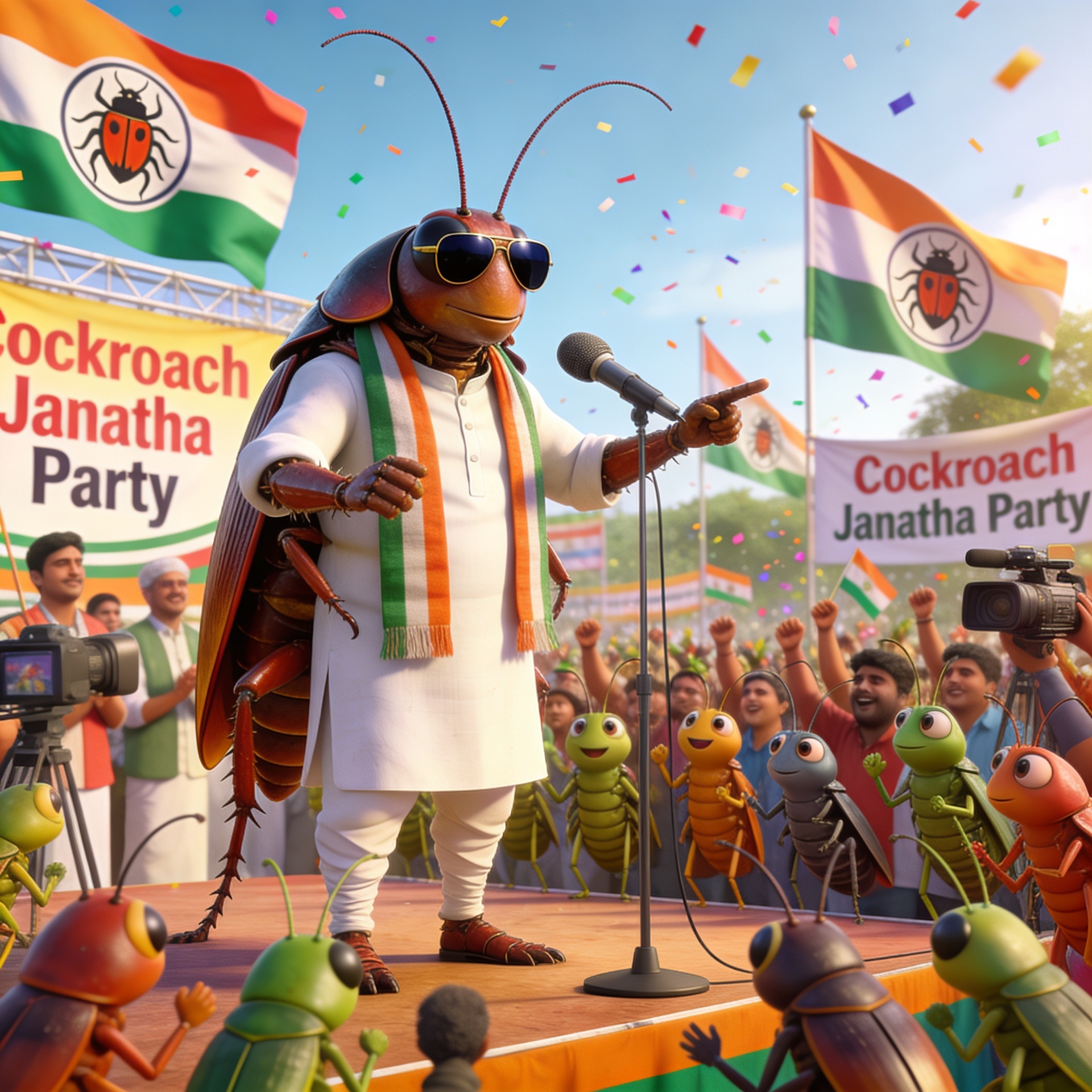
India’s political landscape has witnessed many unusual movements over the decades, but few have emerged as swiftly — or as unexpectedly — as the Cockroach Janata Party. Born not from years of grassroots organizing but from a single controversial statement made inside a courtroom, this satirical yet surprisingly substantive movement has captured the imagination of millions of young Indians in just a matter of days.
The party, whose Hindi name roughly translates to The Cockroach People’s Party, was established on May 16, 2026, by Abhijeet Dipke, a 30-year-old digital media professional from Aurangabad, Maharashtra, who had previously worked in social media strategy for the Aam Aadmi Party. What Dipke set in motion was not merely a trending hashtag — it became a full-fledged online political movement that resonated with a generation tired of being overlooked.
The Spark: A Judge, a Courtroom, a Word
The incident that triggered everything took place on May 15, 2026, when Chief Justice of India Surya Kant, during proceedings in the Supreme Court, made remarks in which he likened unemployed young people to “cockroaches” and described them as “parasites” feeding off the system. The statement spread rapidly across social media platforms, and the reaction was immediate and fierce.
The Chief Justice later attempted to walk back his words, clarifying that his criticism was directed specifically at those who had fraudulently obtained legal qualifications — not at India’s broader youth population, whom he described as inspiring and central to the nation’s future. However, for many young Indians already grappling with job scarcity, rising prices, and a deepening sense of institutional indifference, the clarification felt insufficient and came too late.
Dipke Steps Forward
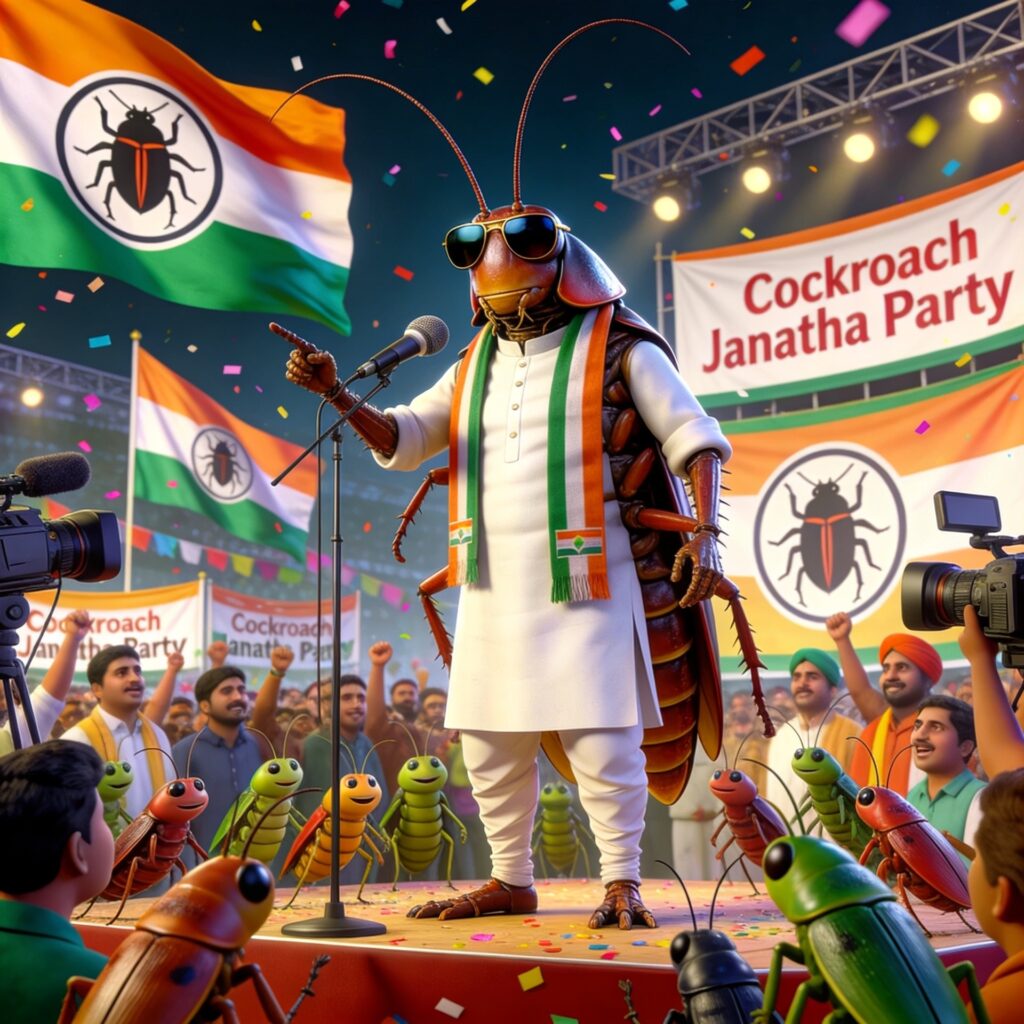
Rather than simply expressing frustration online, Dipke chose to channel the collective anger creatively. He posted a question on X — the platform formerly known as Twitter — asking what would happen if all the “cockroaches” decided to unite. The response was overwhelming.
Within hours, he had converted that idea into something tangible: a website, active social media profiles, and a formal invitation for people to join what he was calling the Cockroach Janata Party — a name deliberately echoing Prime Minister Narendra Modi’s Bharatiya Janata Party, or BJP. The choice of name was pointed and deliberate, designed to draw a sharp contrast between those in power and those they supposedly govern.
In an interview, Dipke expressed the movement’s core sentiment plainly: those who hold power in India have long treated ordinary citizens as pests to be managed rather than people to be served. The party, he said, was a response to exactly that attitude.
A Movement That Grew Overnight
The numbers that followed were staggering for any political outfit, let alone one launched without funding, infrastructure, or institutional backing. Within just 48 hours of launch, the party had attracted hundreds of thousands of followers across Instagram and X, released a party anthem, and registered over one lakh — that is, 100,000 — members through an online sign-up form.
The slogan “Main Bhi Cockroach”, meaning I Am Also a Cockroach, became the rallying cry of the movement, spreading organically across platforms as people across age groups, but predominantly Gen Z users, identified with it. The phrase was both self-deprecating and defiant — an embrace of the insult and a refusal to be diminished by it.
Satire with a Serious Core
On the surface, the Cockroach Janata Party presents itself with considerable humour. It formally describes itself as “Secular, Socialist, Democratic, and Lazy.” Its membership criteria are written in a playful, internet-native tone. Its branding leans heavily into memes and self-aware comedy.
But strip away the jokes, and what remains is a pointed political agenda that addresses some of the most pressing concerns facing Indian youth today. The party’s five-point manifesto includes demands for genuine gender parity in Parliament — calling for 50 percent reservation for women rather than the proposed 33 percent — and equal representation in Cabinet positions. It advocates for a complete ban on the practice of appointing retired Chief Justices to the Rajya Sabha, a move widely seen as a reward for favourable rulings. It also takes a strong stance on electoral integrity, demanding strict accountability for any official found to have tampered with voter records.
The movement has not shied away from weighing in on ongoing national controversies either. It publicly called for the resignation of the Union Education Minister in connection with the NEET examination paper leak scandal, which had led to widespread protests and, tragically, student suicides across the country.
The message running through all of it is consistent: the party positions itself as the political home for young Indians who feel abandoned by mainstream institutions — those battling unemployment, navigating corrupt examination systems, working in unstable employment conditions, and facing cyberbullying with little recourse.
Could This Become Real Politics?
Perhaps the most surprising development in the short life of the Cockroach Janata Party is the possibility that it may not remain purely online. Reports emerged in May 2026 indicating that members and supporters of the CJP were actively discussing fielding a candidate in the upcoming Bankipur Assembly constituency by-election in Bihar. If that were to happen, the party would find itself on the ballot against established forces including the BJP and the Jan Suraaj Party led by political strategist Prashant Kishor.
Whether or not that candidacy materialises, the very fact that the conversation is happening signals how quickly the movement has evolved from internet satire to something with tangible political ambitions.
What It All Means
The Cockroach Janata Party is, at its heart, a symptom of something larger. It reflects the frustration of a generation that came of age during economic disruption, institutional failures, and a political climate in which young voices often feel drowned out. By choosing to own the insult rather than reject it, the movement has turned a moment of humiliation into one of solidarity.
Whether the CJP ultimately fades as a viral moment or grows into a lasting political force remains to be seen. But its rapid rise has already delivered one unmistakable message to India’s establishment: the generation they dismissed as parasites is watching, it is organised, and it is not going anywhere.
As the party’s own declaration puts it — you cannot squash a movement.
Article based on events as of May 21, 2026.