
Supreme Court upholds cancellation of 34% backward classes quota in Andhra local polls
The Supreme Court dismissed the Andhra Pradesh government's appeal against a High Court order striking down a 34% reservation for Backward Classes in local body elections.
News Desk · · 2 min read
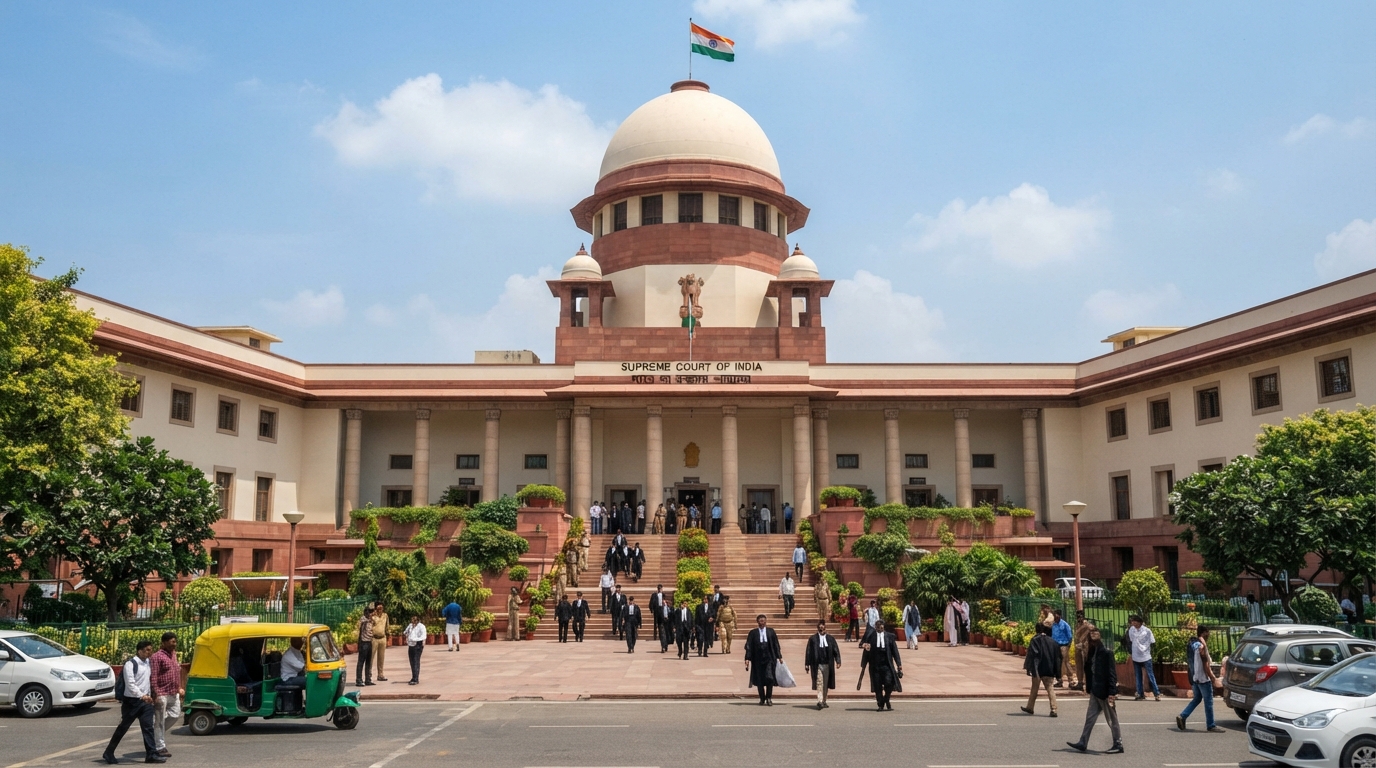

The Supreme Court on Friday dismissed an appeal filed by the Andhra Pradesh government challenging a High Court order that struck down two government orders providing 34 per cent reservation for Backward Classes in local body elections.
A bench comprising Justices Dipankar Datta and Sheel Nagu declined to interfere with the October 1 High Court verdict, describing the lower court's approach as very reasonable. The top court held that the state had failed to produce the specific empirical data required to justify breaching the aggregate 50 per cent reservation ceiling.
Chief Minister N. Chandrababu Naidu's administration had issued G.O.Ms.No.105 on August 20, 2026, restoring the 34 per cent quota in Panchayat Raj Institutions, alongside G.O.Rt.No.1065 on August 19, 2026, which implemented a 33.33 per cent reservation in Urban Local Bodies. The policy was announced by the Chief Minister in the Assembly on August 18 as fulfillment of a coalition election promise.
During the proceedings, Senior Advocate Mukul Rohatgi, appearing for the state, argued that the administration relied on data gathered through a Unified Family Survey under the Family Benefit Management System. However, the bench questioned the statutory foundation of the survey and asked how family data could substitute for a contemporaneous empirical inquiry into political backwardness and representation in local bodies.
Justice Datta pressed the state counsel on the legal basis for utilizing the survey for reservation limits. The bench also noted that a report prepared by an independent dedicated commission headed by a retired high court official remained pending and had not been formally accepted by the state cabinet.
The High Court had earlier set aside the reservation orders in response to a batch of Public Interest Litigations, ruling that the combined vertical reservations for Scheduled Castes, Scheduled Tribes, and Backward Classes exceeded the constitutional ceiling. The High Court directed the state government and the State Election Commission to initiate the local body election process within six weeks.
The Supreme Court's refusal to stay the verdict drew immediate political reactions in Amaravati. Opposition YSRCP leaders Ch. Venugopala Krishna and Dharmana Prasada Rao asserted that the ruling exposed the government's failure to establish a legally sound framework despite knowing statutory limitations. In response, Chief Minister Naidu maintained that while the government orders were set aside, the Telugu Desam Party would independently allocate 34 per cent of party tickets to backward class candidates during the upcoming polls.
The State Election Commission is expected to announce the poll schedules for rural and urban local bodies in line with the timelines mandated by the judiciary.