
Supreme Court Questions Centre on Anti-Cancer Drug Margins and Pricing
The Supreme Court questioned the Union government on Monday over limiting trade margin caps to anti-cancer drugs, demanding broader price controls across pharmaceuticals.
News Desk · October 13, 2026 · 2 min read
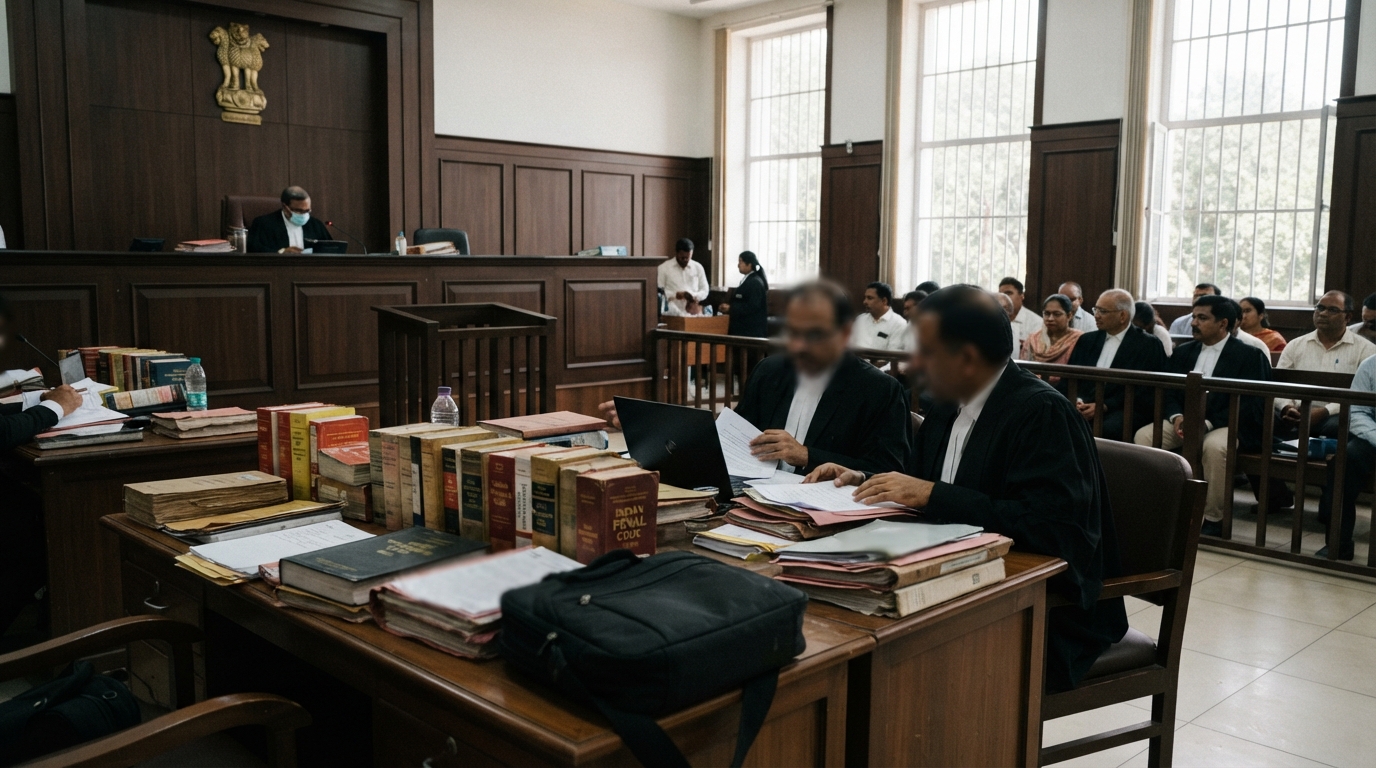

The Supreme Court on Monday questioned the Union government over limiting its proposed trade margin cap to anti-cancer medications, asking why the pricing controls cannot be extended across the entire pharmaceutical sector. A bench comprising Justices Vikram Nath and Sandeep Mehta pressed the Centre for wider regulatory action during a hearing on drug pricing and supply chain markups.
Solicitor General Tushar Mehta informed the bench that the Union government had decided to cap trade margins on anti-cancer drugs at 30 per cent of their maximum retail price. According to an affidavit filed by the Department of Pharmaceuticals, the decision was finalized at a meeting of the National Pharmaceutical Pricing Authority on October 8. The government stated that the measure is expected to reduce maximum retail prices by 20 per cent to 70 per cent, generating annual savings of approximately ₹2,500 crore for patients.
An expert committee under the Director General of Health Services has been constituted to recommend the specific list of anti-cancer medications to be brought under the cap within 10 to 15 days. The notification will initially cover approved cancer treatments while excluding inexpensive formulations.
However, the bench expressed dissatisfaction with the restricted scope of the policy. The judges asked why similar controls could not be applied to other essential medicines and medical devices, pointing to steep disparities between procurement costs and retail prices.
During the proceedings, the court highlighted instances of wide gaps in medical pricing. The bench noted that a saline drip line carrying a maximum retail price of ₹11 was sold at significantly higher rates, and cited an Indian-made cardiac stent supplied to retailers at around ₹5,000 but retailed at ₹25,000.
The court questioned the justification for allowing such high markups in the healthcare supply chain. While acknowledging that manufacturing, research, and transportation expenses form part of operational costs, the bench remarked that existing retail margins placed an undue financial burden on patients and public health systems.
Defending the current framework, the Union government outlined its pricing mechanisms under the Drugs Prices Control Order, 2013, noting that ceiling prices have been fixed for 935 scheduled formulations. The Centre also pointed out that non-scheduled formulations are monitored to ensure annual price increases do not exceed 10 per cent.
Concluding the session, the apex court directed the Centre to work out comprehensive modalities for broader medicine price regulation. The bench posted the matter for further hearing on October 27.