JK High Court orders passport revival for student to finish MBBS in Iran
The Jammu and Kashmir High Court directed authorities to revive a Srinagar student's passport, allowing her to return to Iran and complete her MBBS degree.
News Desk · October 9, 2026 · 2 min read
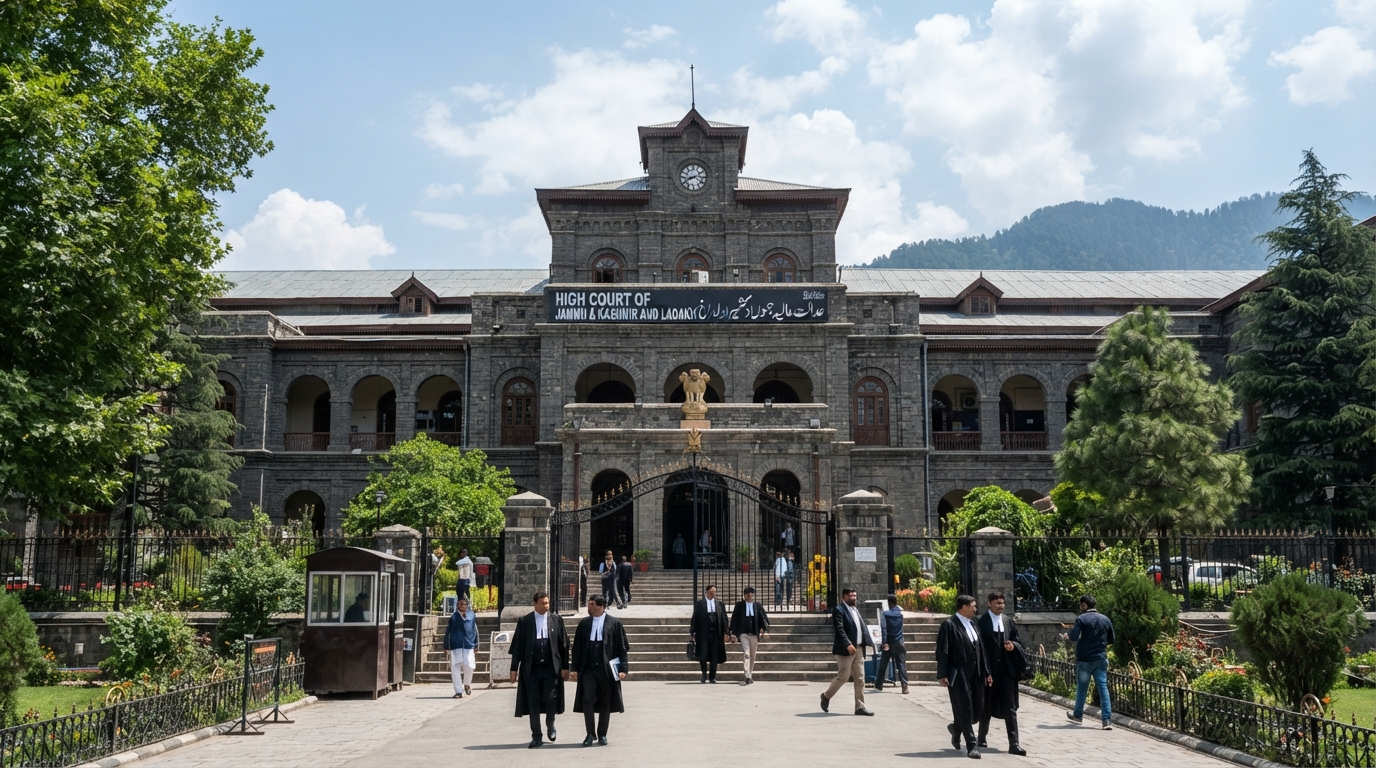

The High Court of Jammu and Kashmir and Ladakh on Thursday directed authorities to revive the passport of a Srinagar medical student, enabling her to return to Iran and complete her undergraduate medical degree. A division bench comprising Chief Justice Pushpendra Singh Bhati and Justice Wasim Sadiq Nargal issued the ruling while setting aside an earlier decision that had left the student's academic future in limbo.
The ruling provides legal relief to Ibra Khan, who is enrolled in the MBBS course at the Tehran University of Medical Sciences. Her legal representation argued successfully that halting her education midway due to administrative actions involving familial background would cause irreparable damage to her professional prospects.
Ms. Khan had originally secured her travel document in October 2024. Earlier this year, she returned to Jammu and Kashmir from Iran following the armed conflict involving Iran and the United States-Israel coalition. Shortly after her return, passport officials served her show-cause notices in March and April, subsequently impounding her travel document on May 4 under Section 10(3)(b) of the Passports Act, 1967.
State authorities justified the impounding by citing an adverse police verification report linked to a criminal case registered against her father in 1997. Countering this, legal submissions pointed out that the student was born in 2005, years after the lodging of the FIR against her father, and maintained a clean personal record.
A single-judge bench had earlier dismissed her initial writ petition, directing her to pursue an alternative statutory appeal. Following that dismissal, the appellant approached the division bench, emphasizing that she had already finished half of her medical curriculum under valid permissions granted by Indian and Iranian authorities.
The bench observed that the order was passed under peculiar circumstances, taking strict note of the academic progress she had already achieved. The court held that forcing an abrupt halt to her studies at this stage would jeopardize her career trajectory.
While ordering the revival of the travel document for the remaining duration of her course, the bench empowered state authorities to conduct a fresh security audit. Officials may impose specific conditions based on their expert assessment prior to handing back the active document.
The formal clearance ensures that Ms. Khan can rejoin classes at the Tehran institution, where her program is recognized by the National Medical Commission, once administrative compliance procedures conclude.