
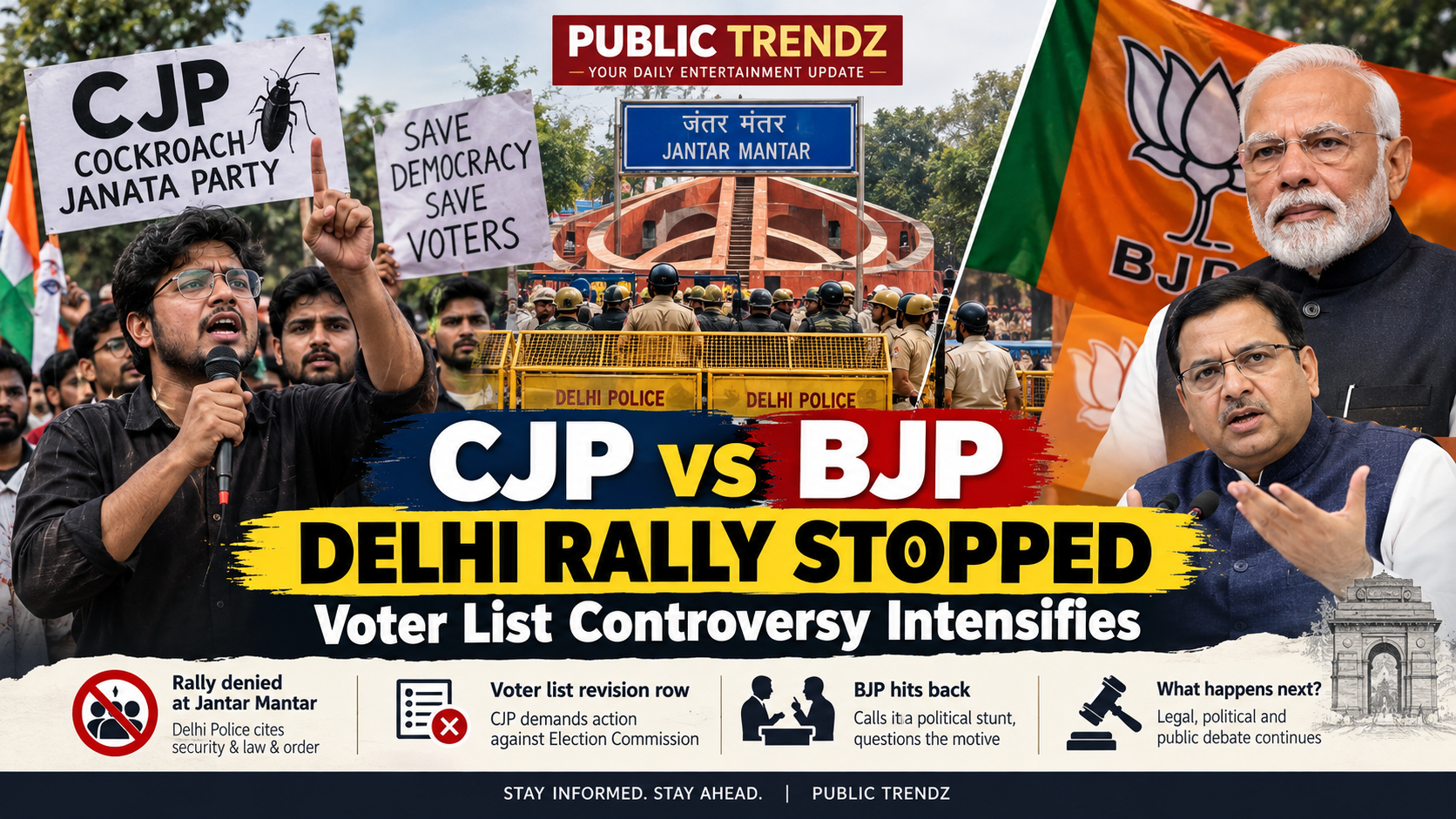

CJP vs BJP: Why Was the Delhi Rally Stopped?
A major political controversy unfolded in New Delhi on October 10, 2026, after authorities prevented a planned rally organised by the Cockroach Janata Party (CJP) at Jantar Mantar. The protest was called to demand the resignation of Chief Election Commissioner Gyanesh Kumar over allegations surrounding the revision of electoral rolls in India.
The proposed demonstration attracted nationwide attention as police imposed extensive security restrictions, set up barricades and detained protesters and political figures. The incident triggered a wider debate about democratic protests, electoral transparency and the limits of restrictions imposed in the name of public order.
While CJP and opposition figures criticised the police action, BJP leaders described the demonstration as ineffective and accused opposition groups of attempting to destabilise the country.
What Is the Cockroach Janata Party (CJP)?
The Cockroach Janata Party, commonly referred to as CJP, emerged from an online youth-led movement and developed into a political pressure group campaigning on public accountability and electoral issues.
The movement gained attention through protests over examination-related controversies and subsequently expanded its campaign to questions concerning voter registration and the functioning of election authorities.
CJP founder Abhijeet Dipke and other leaders called for public participation in the October 10 demonstration, seeking accountability from the Election Commission over alleged irregularities in electoral-roll revisions.
The movement's growing visibility has placed it at the centre of a political confrontation involving the ruling BJP, opposition parties and election authorities.
Why Did CJP Call the Rally Against the Election Commission?
The central issue behind the protest was the Special Intensive Revision (SIR) of electoral rolls and the removal of names from voter lists.
According to reports, approximately 130 million voter entries were removed during the wider verification exercise. Election Commission data cited in reporting included entries associated with people who had relocated, could not be traced or had died.
However, the scale of the deletions has prompted questions from opposition parties and civil society groups. Critics have alleged that the process could disproportionately affect marginalised communities and voters who traditionally support opposition parties.
CJP demanded that Chief Election Commissioner Gyanesh Kumar resign and called for greater transparency in the electoral process.
The Election Commission has defended the revision process, maintaining that the exercise is intended to identify duplicate and ineligible entries. The BJP has also rejected allegations that the process was designed to benefit the ruling party.
It is important to distinguish between the documented removal of voter entries and allegations about political motives or electoral consequences, which remain contested.
Why Did Delhi Police Deny Permission for the Rally?
Delhi Police denied permission for the proposed gathering at Jantar Mantar, citing reasons that included the late submission of the application, alleged non-compliance with directions during an earlier protest, and concerns about public safety, traffic and law and order.
Ahead of the planned demonstration, authorities introduced extensive security measures across central Delhi. Barricades restricted access to key areas, while transport services were disrupted and several railway services were cancelled or altered.
Police also detained protesters and political figures as they attempted to participate in or reach the demonstration.
The restrictions became a major issue in their own right, with critics questioning whether the measures were proportionate to the public-order concerns cited by authorities.
Authorities, meanwhile, maintained that managing security and preventing potential disruption were important considerations.
CJP vs BJP: What Are the Two Sides Saying?
The confrontation has developed into a wider political dispute over the right to protest and the credibility of the electoral-roll revision process.
CJP's position
CJP has argued that the rally was intended to demand accountability and transparency from the Election Commission. Its leaders criticised the restrictions and detentions, maintaining that preventing demonstrators from reaching the protest site would not end their campaign.
The movement said it would continue pressing for electoral reforms and answers to its concerns about voter-list revisions.
BJP's position
BJP leaders criticised the protest and described it as a failure. Party representatives accused opposition groups of using the demonstration to create political instability and rejected claims that the electoral-roll revision was intended to favour the ruling party.
The BJP maintains that electoral success reflects public support and has disputed the allegations made against the revision process.
The central question
The dispute raises two separate questions: whether the electoral-roll revision was conducted properly, and whether the restrictions imposed on the rally were justified.
Both questions require evidence and transparent explanations from the relevant authorities rather than assumptions based solely on political accusations.
What Happened to CJP Leaders and Other Protesters?
CJP founder Abhijeet Dipke and other senior leaders were detained after arriving in Delhi. Police also detained numerous protesters, while opposition figures and public personalities were among those affected by the security operation.
News reports on October 10 differed in their estimates of the total number of people detained as the operation unfolded.
On October 11, Reuters reported that Dipke and two other senior CJP leaders had been released following a court appearance, subject to a condition concerning the maintenance of peace for one year.
Despite the disruption, the movement indicated that it intended to continue its campaign. The developments also attracted attention beyond Delhi, with questions about peaceful assembly and the handling of political demonstrations becoming part of the national conversation.
Does Stopping a Rally Raise Questions About Democracy?
The incident has renewed debate about the relationship between public order and democratic freedoms.
Peaceful assembly is an important democratic right in India, although it is subject to lawful and reasonable restrictions. Authorities have responsibilities to protect public safety, manage traffic and prevent violence. At the same time, restrictions on demonstrations should be assessed against their legal basis, necessity and proportionality.
The key issue is not simply whether a rally was stopped, but whether the decision followed the applicable law and whether citizens had a meaningful opportunity to express their concerns peacefully.
Similarly, allegations of voter-list manipulation require transparent investigation and verifiable evidence. The removal of names from electoral rolls can have serious implications for eligible voters if errors occur, making accessible correction and re-enrolment procedures important.
What Happens Next in the CJP vs BJP Controversy?
The controversy is likely to remain in the public discussion as CJP continues to demand answers from the Election Commission and BJP leaders defend the electoral-roll revision process.
Important developments to watch include:
Any further CJP demonstrations or announcements.
Official explanations concerning the denial of rally permission and the detention of protesters.
Clarifications from the Election Commission about voter-list revisions and procedures for eligible voters whose names have been removed.
Any legal proceedings or independent findings concerning the allegations raised by the movement.
Responses from the BJP, opposition parties and civil society groups.
The outcome will depend on the evidence presented, official responses and any subsequent legal or administrative decisions.
Conclusion: CJP vs BJP Is About More Than One Rally
The stopping of the CJP rally at Jantar Mantar has become a significant political flashpoint in India. What began as a protest demanding the resignation of the Chief Election Commissioner has developed into a broader debate about electoral transparency, government accountability and the right to peaceful assembly.
CJP and opposition figures have questioned the restrictions and the voter-list revision process, while the BJP and Election Commission have rejected allegations of wrongdoing.
The most important next step is greater transparency: clear explanations of the electoral-roll revision, accessible remedies for eligible voters and a lawful, proportionate approach to peaceful demonstrations.
As the controversy develops, the public will be looking for verifiable facts and accountable decisions rather than competing political claims.
Follow Public Trendz for the latest political news, election updates, public-policy developments and independent reporting from India.